

Introduction: Growing Debate on the Destruction of Aravalli Hills in India
The Destruction of Aravalli Hills has emerged as a major environmental and development concern in India. Spanning Gujarat, Rajasthan, Haryana, and Delhi, the Aravalli range is among the oldest mountain systems in the world. Despite its immense ecological value, large portions of the Aravallis are being degraded due to mining activities, rapid urban expansion, infrastructure development, and weak policy enforcement.
Supporters of development argue that land conversion in Aravalli regions is necessary for economic growth, housing, and industrial expansion. However, environmental experts warn that the destruction of the Aravalli Hills could cause irreversible ecological damage, water scarcity, climate imbalance, and serious public health issues. This article examines whether sacrificing the Aravallis is truly the right decision for the country or a costly mistake with long-term consequences.
Understanding the Aravalli Hills Ecosystem: India’s Natural Shield
The Aravalli Hills are estimated to be over 1.5 billion years old, making them older than the Himalayas. These hills act as a natural barrier against desertification by preventing the spread of the Thar Desert toward eastern India.
Ecological Importance of the Aravalli Hills
The Aravalli ecosystem plays a vital role by:
- Recharging groundwater aquifers
- Regulating local and regional climate
- Supporting forests, wildlife, and biodiversity
- Reducing air pollution in nearby urban areas
The Destruction of Aravalli Hills threatens this ecological backbone, particularly in fast-growing urban regions like Delhi-NCR.
Key Reasons Behind the Destruction of Aravalli Hills
Several factors are responsible for the continuous degradation of the Aravalli range.
Mining and Quarrying in Aravalli Hills
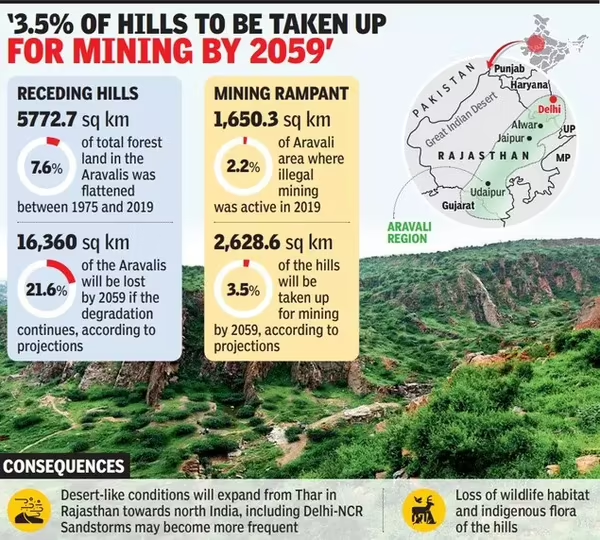
Both legal and illegal mining for granite, marble, and stone have severely damaged large sections of the Aravalli Hills.
Rapid Urbanization Near Aravalli Regions
Cities such as Gurugram, Faridabad, and parts of Rajasthan have expanded into Aravalli land for residential and commercial development.
Infrastructure Projects in Aravalli Forest Areas
Highways, railways, and industrial corridors passing through forested Aravalli zones weaken the natural structure of the hills.
Weak Environmental Laws and Enforcement
Despite court orders and environmental regulations, enforcement gaps and land reclassification allow continued exploitation.
Economic Arguments Supporting Development in Aravalli Hills
Proponents of development argue that restricting activities in Aravalli regions limits economic progress. Common arguments include:
- Job creation through mining, construction, and industries
- Rising urban housing demand
- Improved infrastructure and connectivity
- Growth of local economies and government revenue
From this viewpoint, the Destruction of Aravalli Hills is often portrayed as a necessary trade-off for national development.
Environmental Impact of the Destruction of Aravalli Hills
The environmental costs of destroying the Aravallis far outweigh short-term economic gains.
Biodiversity Loss in Aravalli Ecosystem
The Aravalli region supports leopards, hyenas, jackals, birds, reptiles, and native plant species. Habitat destruction pushes many species toward extinction.
Rising Desertification Due to Aravalli Destruction
The hills act as a natural shield against desert winds. Their degradation accelerates desert spread, especially in Rajasthan and Haryana.
Decline in Forest Cover and Soil Health
Reduced vegetation leads to soil erosion, poor rainfall absorption, and loss of carbon sinks.
Impact of Aravalli Hills Destruction on Water Resources
One of the most serious consequences of the Destruction of Aravalli Hills is worsening water scarcity. The hills naturally store rainwater and recharge underground aquifers.
Without the Aravallis:
- Groundwater levels drop sharply
- Wells and boreholes dry up
- Urban water shortages increase
- Rural agriculture suffers
Cities like Delhi and Gurugram already face water crises, which will intensify if destruction continues.
Air Pollution and Climate Change Effects of Aravalli Degradation
The Aravalli Hills function as a natural air purifier for North India. Forested areas trap dust and pollutants, improving air quality.
Their destruction results in:
- Higher PM2.5 and PM10 levels
- Increased temperatures due to loss of green cover
- More frequent heatwaves
- Reduced climate resilience
The Destruction of Aravalli Hills directly worsens Delhi-NCR’s air pollution problem.
Legal Framework and Supreme Court Orders on Aravalli Protection
India has several environmental laws aimed at protecting ecologically sensitive areas, including:
- Environment Protection Act
- Forest Conservation Act
- Wildlife Protection Act
The Supreme Court has repeatedly intervened to restrict mining and construction in the Aravalli Hills. However, inconsistent enforcement and legal loopholes continue to weaken protection efforts.
Social and Public Health Impact of Aravalli Hills Destruction
Environmental degradation caused by Aravalli destruction directly affects communities.
Public Health Risks from Environmental Damage
- Rising respiratory diseases due to pollution
- Heat stress and dehydration
- Contaminated groundwater sources
Loss of Livelihoods in Aravalli Regions
Communities dependent on agriculture, grazing, and forest produce face income loss and instability. The Destruction of Aravalli Hills disproportionately affects rural and marginalized populations.
Sustainable Alternatives to the Destruction of Aravalli Hills
Development does not need to come at the cost of nature. Sustainable solutions include:
- Eco-sensitive zoning instead of mass land conversion
- Green infrastructure and vertical urban growth
- Restoration of degraded Aravalli areas
- Strict action against illegal mining
- Promotion of eco-tourism and conservation-based employment
Balancing development with conservation ensures long-term environmental and economic stability.
Global Examples Showing the Risk of Environmental Destruction
Countries that ignored environmental warnings now face severe consequences:
- Desertification in Africa
- Water crises in Central Asia
- Urban flooding caused by deforestation
India risks repeating these mistakes if the Destruction of Aravalli Hills continues unchecked.
Is the Destruction of Aravalli Hills the Right Decision for India?
From a long-term national perspective, the answer is no. While development is important, destroying a critical ecological system undermines environmental security, water availability, public health, and climate resilience.
Short-term economic gains from the destruction of the Aravalli Hills are outweighed by long-term environmental and social costs. Sustainable development is the only responsible path forward.
Conclusion: Protecting the Aravalli Hills Means Protecting India’s Future
The Aravalli Hills are not just landforms; they are living ecosystems that support millions of people. Protecting them is essential for water security, climate balance, biodiversity, and public health.
Instead of debating whether destroying the Aravallis is right, India must focus on conserving, restoring, and sustainably managing this ancient mountain range. The future of the country’s environment and economy depends on it.
